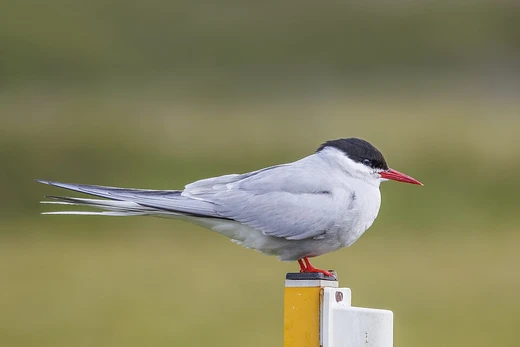
B95 (red knot)
A red knot whose migrations exceeded the distance to the Moon.

Wikipedia / Wikimedia Commons
B95 (born c. 1992), nicknamed Moonbird, is a male red knot of the subspecies Calidris canutus rufa, a shorebird in the sandpiper family. It was ringed in Río Grande, Tierra del Fuego, Argentina in February 1995 by Argentine biologist Patricia González, and has been resighted many times since. It has become symbolic in efforts to conserve shorebirds.
- born
- c. 1992
- died
- unknown
- field
- ornithology, conservation
- nationality
- not specified (bird of the Americas)
- known_for
- annual migrations totaling distance to the Moon; symbol of shorebird conservation
Lore & Background
B95, nicknamed Moonbird, is a male red knot of the subspecies Calidris canutus rufa. It was ringed in Río Grande, Tierra del Fuego, Argentina in February 1995 by Argentine biologist Patricia González. It has been resighted many times since and recaptured at least three times, the last in 2007 (aged approximately 14), when it was found to be 'as fit as a three-year-old'. Red knots can live over 27 years, as documented by a bird in Europe.
Its annual migrations along the Atlantic Flyway between Tierra del Fuego and the Canadian Arctic total approximately 32,000 kilometers (20,000 miles) per year, and in sum have exceeded the distance to the Moon. In spring, B95 stops in Delaware Bay to feed on horseshoe crab eggs before proceeding to breeding grounds on an island in the north of Hudson Bay. In November, it migrates back to Tierra del Fuego, where it feeds on mussels in the restinga tidal flats.
Reader's Guide
B95 has become a powerful symbol in efforts to conserve shorebirds, particularly the red knot. Its remarkable annual migrations—totaling more than the distance to the Moon—highlight the extraordinary endurance of this species. The red knot population has declined since the 1990s due to the harvesting of Delaware Bay's horseshoe crabs for bait, leading to restrictions on that harvest. B95's story was documented by writer Phillip Hoose in his book Moonbird: A Year on the Wind with the Great Survivor B95 (2012), which received an honor in the Robert F. Sibert Award and was a finalist in the YALSA Award for Excellence in Nonfiction. A statue of B95 stands in Mispillion Harbor on Delaware Bay, and the city of Río Grande in Tierra del Fuego is said to have proclaimed B95 its 'natural ambassador'.
Did You Know?
- B95 was ringed in February 1995 in Río Grande, Tierra del Fuego, Argentina by biologist Patricia González.
- Its annual migrations total approximately 32,000 kilometers (20,000 miles).
- In 2007, at about age 14, B95 was recaptured and found to be 'as fit as a three-year-old'.
- A general shorebird monument exists in Mispillion Harbor on Delaware Bay.
Frequently Asked Questions
Who is B95 (red knot)?
B95, nicknamed Moonbird, is a male red knot (Calidris canutus rufa) estimated to have been born around 1992. It was first ringed in Río Grande, Tierra del Fuego, Argentina in February 1995 by Argentine biologist Patricia González, and has been resighted many times since.
What is B95 (red knot) famous for?
Moonbird earned its nickname because the cumulative distance it has covered across its annual migrations exceeded the distance from Earth to the Moon. It is widely cited as one of the most extraordinary long-distance migratory birds ever tracked.
How does B95 (red knot)'s story end?
B95's ultimate fate is unknown; no confirmed death record exists in the tracking data. Its last verified sightings leave the bird's final chapter open, which keeps ornithologists hoping it may still be resighted.
Why is B95 (red knot) important to conservation?
Moonbird has become a living emblem for shorebird habitat protection, because its record-breaking flights depend on an unbroken chain of coastal stopover sites. Conservation advocates use its story to highlight how vulnerable the entire Atlantic flyway is to wetland loss.
How was B95 (red knot) first identified and tracked?
Argentine biologist Patricia González ringed the bird in February 1995 at Río Grande in Tierra del Fuego. That single marking event is what allowed decades of resightings across the Americas and Europe to be logged under the identifier B95.
More in Birds of the Arctic 1-24
Spotted an error? Know more?
This is a living reference — every entry is fact-audited, and reader corrections feed straight into our audit queue. Suggest an edit · See this site's audit record