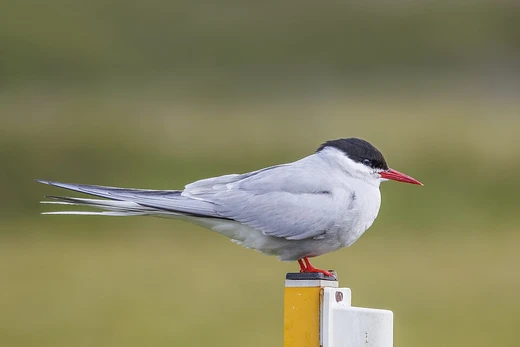
Little stint
A tiny Arctic-breeding wader that migrates to Africa and Asia.
The little stint (Calidris minuta) is a very small wader that breeds in arctic Europe and Asia. It is a long-distance migrant, wintering south to Africa and south Asia, and occasionally appears as a vagrant to North America and Australia. Its genus name derives from Ancient Greek, used by Aristotle for grey waterside birds, and its specific name minuta is Latin for 'small.'
- field
- Ornithology
- known_for
- Very small wader, long-distance migrant, polygamous nesting behavior
- breeding_range
- Arctic Europe and Asia
- wintering_range
- Africa and south Asia
- conservation_status
- Covered by the Agreement on the Conservation of African-Eurasian Migratory Waterbirds (AEWA)
Lore & Background
The little stint is distinguished from other waders by its small size, fine dark bill, dark legs, and quick movements. It can be identified in all plumages by its fine bill tip, unwebbed toes, and long primary projection. Its call is a sharp 'stit.' Breeding adults have an orange wash on the breast, a white throat, and a strong white V on the back; winter plumage is difficult to identify, while juveniles have pale crown stripes and a pinkish breast. An apparent hybrid between this species and Temminck's stint has been reported from the Netherlands.
Reader's Guide
The little stint is significant as a model of Arctic-breeding wader ecology and migration. Its population dynamics are tied to lemming cycles: in poor lemming years, predators like skuas and snowy owls turn to Arctic-breeding waders, including the little stint. It is gregarious in winter, often forming large flocks with other Calidris waders, especially dunlin, on coastal mudflats or inland pool edges. The species is protected under the Agreement on the Conservation of African-Eurasian Migratory Waterbirds (AEWA), highlighting its importance for international conservation. Its nesting behavior is notable for polygamy, with males and females sometimes incubating separate clutches in low-lying grassy tundra near wetlands. The diet consists of small invertebrates, with chicks in the High Arctic relying heavily on Diptera, particularly Chironomidae, which form nearly half of their summer diet. The little stint's identification challenges and hybrid records contribute to ongoing ornithological study.
Did You Know?
- The little stint's call is a sharp 'stit.'
- An apparent hybrid between the little stint and Temminck's stint has been reported from the Netherlands.
- Its numbers depend on lemming populations; in poor lemming years, predators like skuas and snowy owls take Arctic-breeding waders instead.
- During summer in the High Arctic, growing chicks rely heavily on Diptera, particularly Chironomidae, which form nearly half of their diet.
More in Birds of the Arctic 1-24
Spotted an error? Know more?
This is a living reference — every entry is fact-audited, and reader corrections feed straight into our audit queue. Suggest an edit · See this site's audit record